
What Does ‘Cuba Libre’ Look Like? We Already Know
Originally published at DCJournal.com
As the Trump administration pressures a resilient Cuban regime, the vision of a post-communist Cuba grows increasingly clear.
Amid severe food and fuel shortages on the island, there is genuine cause for hope and optimism. For nearly 70 years, Castro communism has repressed the Cuban people and choked their economy into nothingness, while their Floridian neighbors — just 90 miles north — have enjoyed the privileges bestowed by entrepreneurship, rugged individualism and private-sector innovation. For too many long and painful decades, free enterprise has been a fantasy in Cuba, and thousands of brave Cubans have lost their lives fighting for freedom.
What does a “Cuba Libre” actually look like? While a free Cuba is inarguably preferable to today’s alternative, the weeks and months ahead bring more questions than answers.
History offers clues. Before Castro communism and General Fulgencio Batista’s military dictatorship, Cuba was a democratic republic. The Constitution of 1940 ensured the separation of state powers, including an independent judiciary that protected labor and property rights.
In the 1950s, Cuba was one of the most developed economies in the Western Hemisphere, driven largely by a dominant sugar industry, the world’s largest sugarcane producer, and defined by its thriving tourism. Celebrities such as Ernest Hemingway and Frank Sinatra flocked to Havana, which the now-defunct tourism magazine Cabaret Quarterly described as “a mistress of pleasure, the lush and opulent goddess of delights.” Cubans drove the latest American cars, watched the newest Hollywood movies, and shopped at Woolworth’s department store.
In 1950, Cuba ranked seventh in per-capita GDP out of the 47 countries in Latin America and the Caribbean (even the socialist journalist Against the Current acknowledges this). By 1958, Cuba ranked third in the region, trailing only Uruguay and Venezuela — another collectivist nightmare.
Today, Cuba ranks in the bottom third. More than 95 percent of the Cuban population earns the equivalent of $3 a day. Most Cubans have stopped eating breakfast, lunch or dinner due to financial struggles or food shortages.
Even Cuban communist hardliners and far-left sympathizers struggle to find economic indicators of progress. Cuba’s rate of electrical power development since the 1950s ranks behind every other country in the region except Haiti. Pre-Castro Cuba was third in Latin America for per-capita food consumption; under Castro, the country dropped to last.
Cuba once ranked first in Latin America and fifth in the world in televisions per capita. Today, many Cubans are struggling to find basic food and drinking water, let alone Netflix shows and YouTube videos.
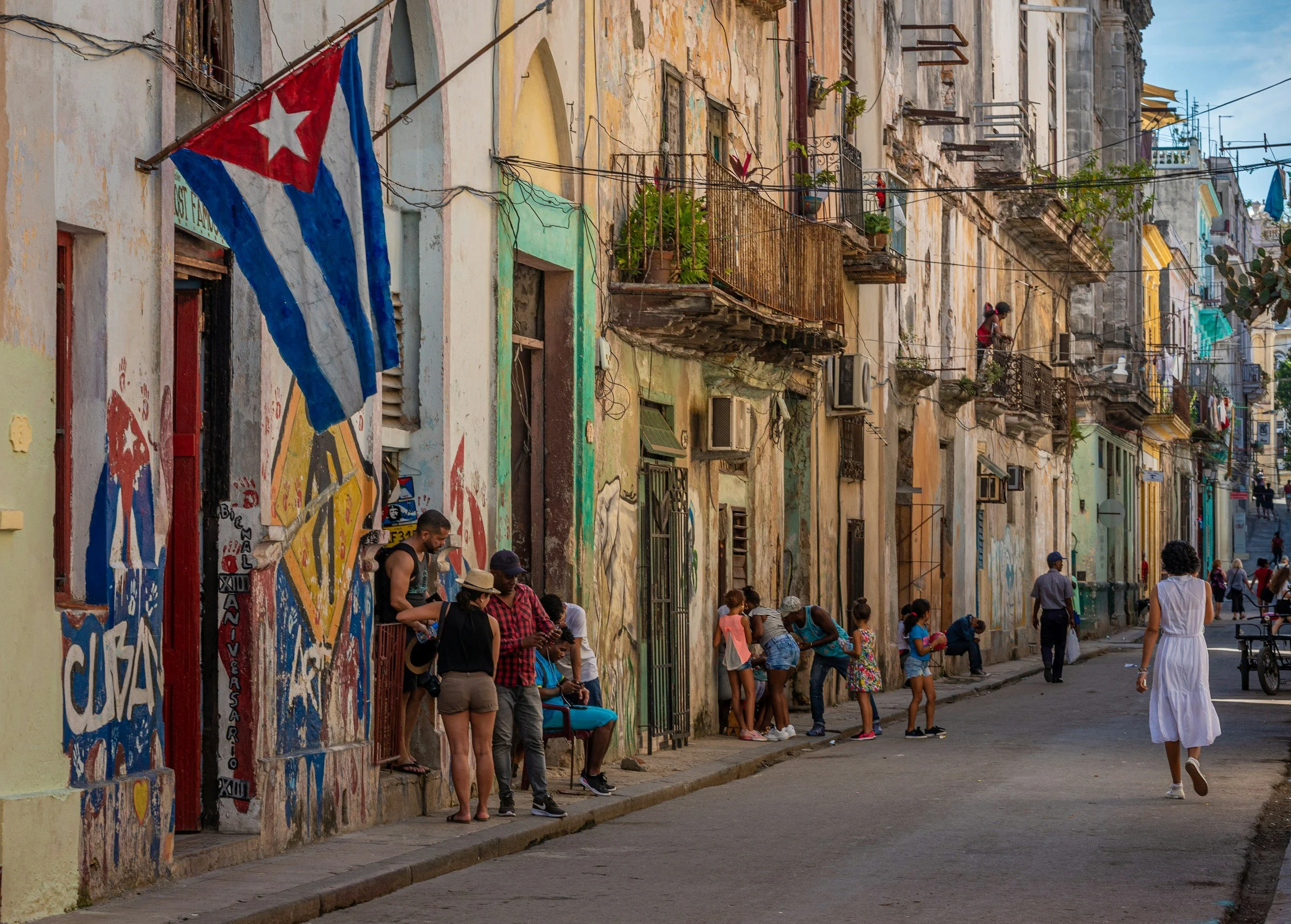
If pictures are worth 1,000 words, they certainly tell the Cuban story. Back in 2019, The Guardian published a “then versus now” retrospective on Havana’s 500th birthday. The headline image of Neptuno Street’s decline is shocking.
Since the 1950s, Havana’s skyline has hardly changed. The city’s classic automobiles reflect a city stuck in time, where tens of thousands of vintage vehicles remain on the road and people still drive Soviet Ladas and a Russian car named “Moskvitch.”
Enter Miami during that period. Since the 1950s, the Magic City turned from sand and swamp into an American supercity with more than 400 high-rises. Between 2004 and 2024, the Brickell and downtown skylines grew from five buildings to nearly 70. Brickell Key was literally ground zero, developing from Claughton Island — a destination for discarded dredge material — into a luxury community with a new $1 billion Mandarin Hotel project underway. Like The Guardian’s retrospective for Havana, the Miami Herald published its own “then versus now” for Miami, illustrating a city of unprecedented change over the decades.
The Cuban, at 1200 Coral Way in Miami, offers a deeper look at “the Cuban experience” — the tragic tale of how a once-prosperous Cuba fell into dictatorial disrepair within a single generation. As the son of escapees from what was once communist Yugoslavia, I am particularly saddened by the current state of the island, but museum visitors don’t need a personal experience with communism to learn more about its evils and our own blessings in America.
Havana most likely won’t turn into Miami two decades from now, but it doesn’t need to become a second Magic City for Cubans to have a brighter future. What the people of Cuba need to reclaim their former glory is much less collectivism and much more capitalism.
Cuba Libre is possible, as history proves. It means the past becoming prologue, progress and prosperity — again.